How to Start a New Export Control Classification
This guide explains how to classify goods for export controls (Dual-Use, Armaments) using the ClassificationPilot tool within TariffPilot.
If you prefer to watch a video tutorial, you can find it here in German.
Step 1: Start a New Process
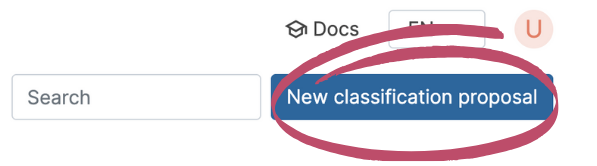
Navigate to the dashboard. Click on the button "New classification proposal".
Step 2: Enter Basic Information
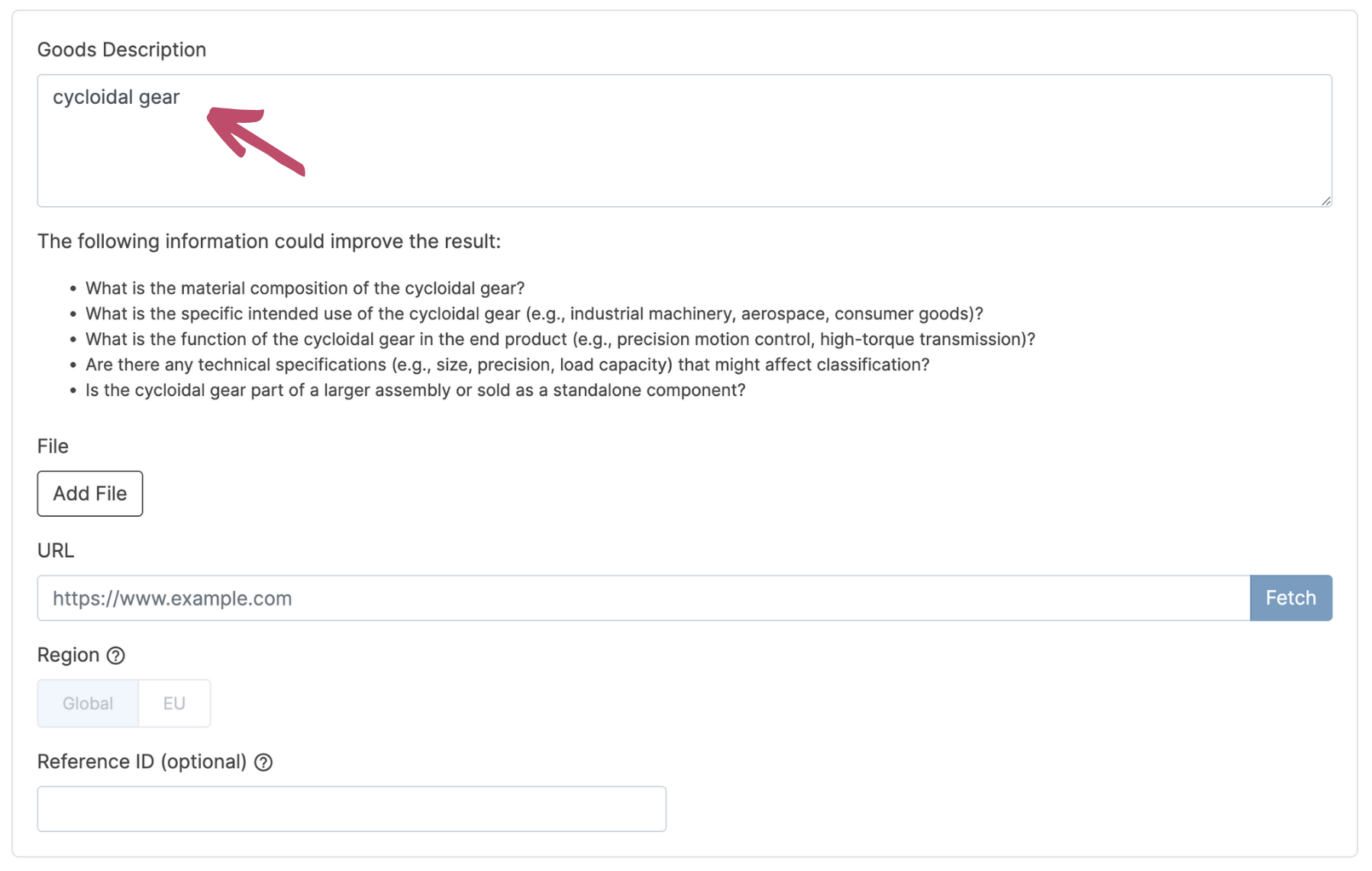
Goods Description: Enter a concise description of the item (e.g., "Cycloidal gear") in the text field. The ClassificationPilot will generate information that could improve the classification results.
-
You can upload up to 3 files or add a URL to improve results. Or use the files or URLs without entering a description.
-
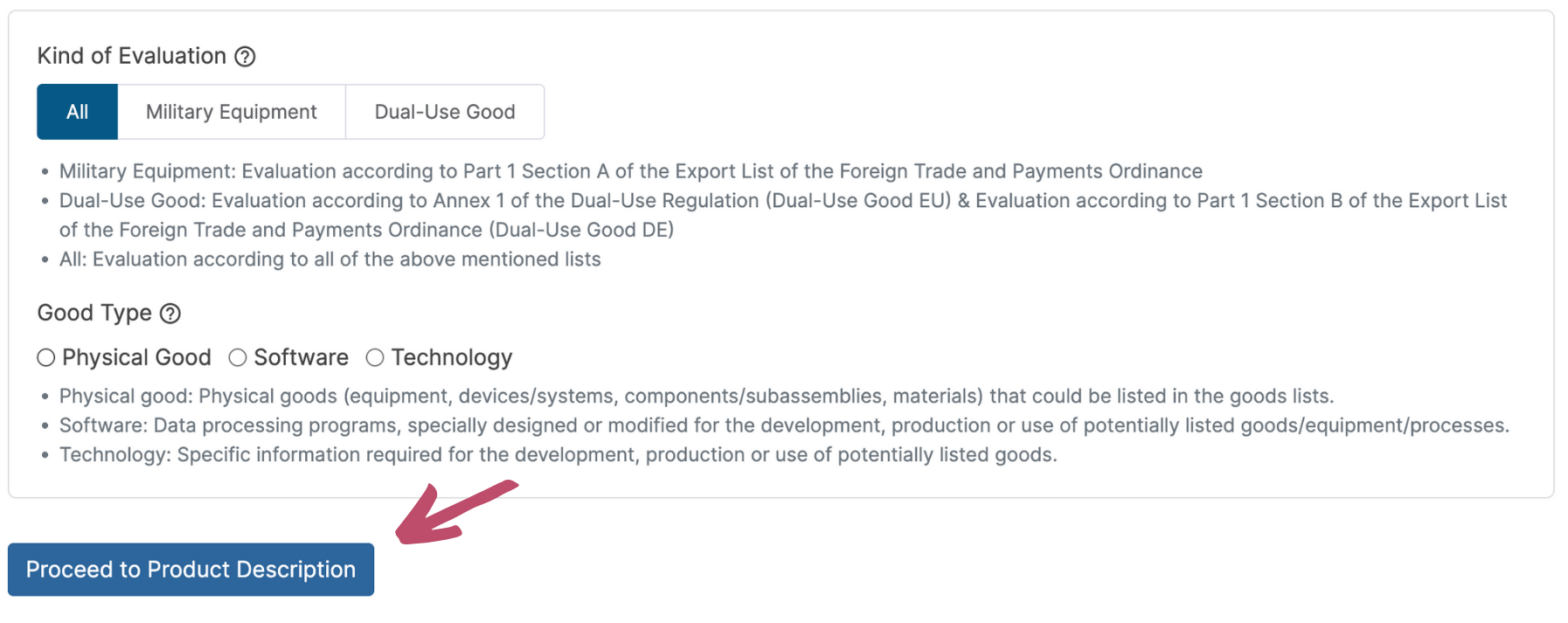
Select what to check for: Armaments, Dual-Use, or All.
-
Select the Type of Good: Choose between Physical Goods, Software, or Technology.
-
CN Code: Enter if known. This is optional but helps the system generate valid results.
-
State of Good: Select if it is a Main Good or Component.
-
Area of Application: Type in the industry or use case (e.g., "Mechanical Engineering").
-
Country of destination (optional): Used to check the general licenses (AGG). You can change it later in the AGG tab.
-
Click "Proceed to Product Description".
Step 3: Review and Edit Goods Profile
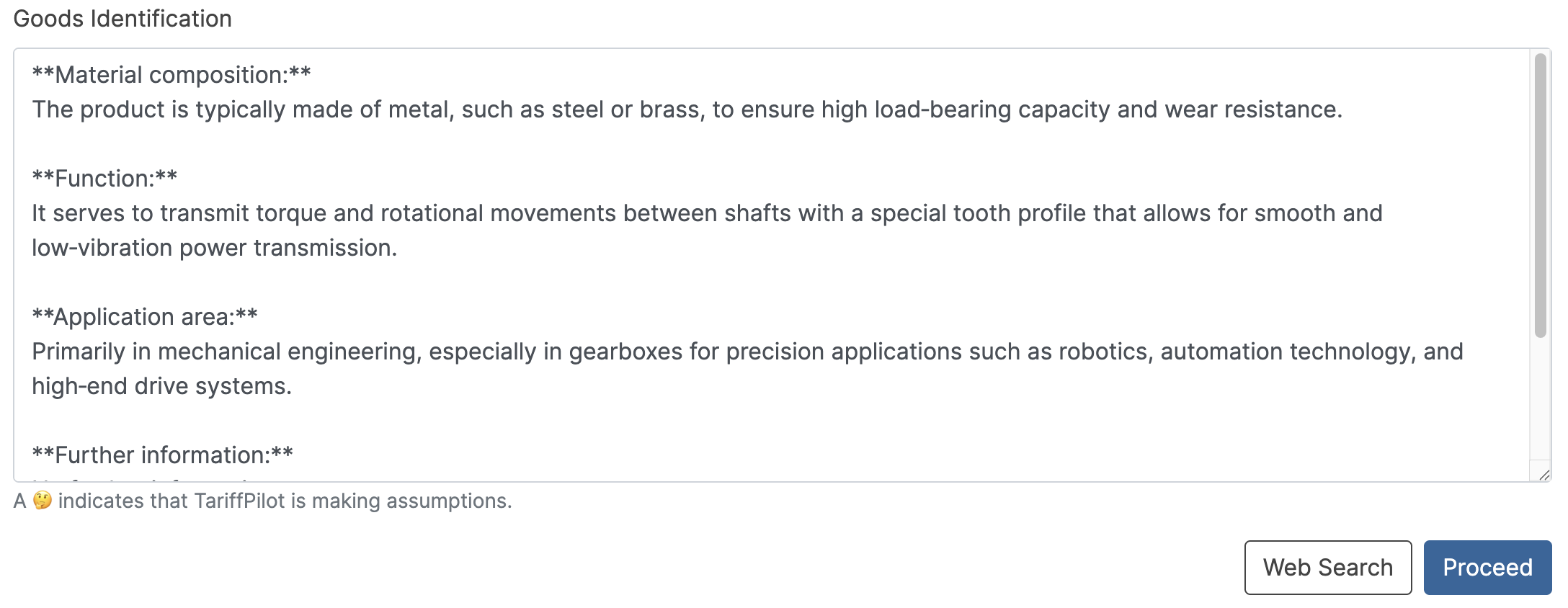
The system generates a "Goods Profile" – a text summary resembling a "wanted poster" for your item. Review the text: Ensure the information is as precise as possible.
Edit manually: The text field is fully editable. You should delete generic information and keep only specific, relevant details to ensure a valid classification proposal. Click "Proceed".
Step 4: Refinement Loop (Handling Versions)
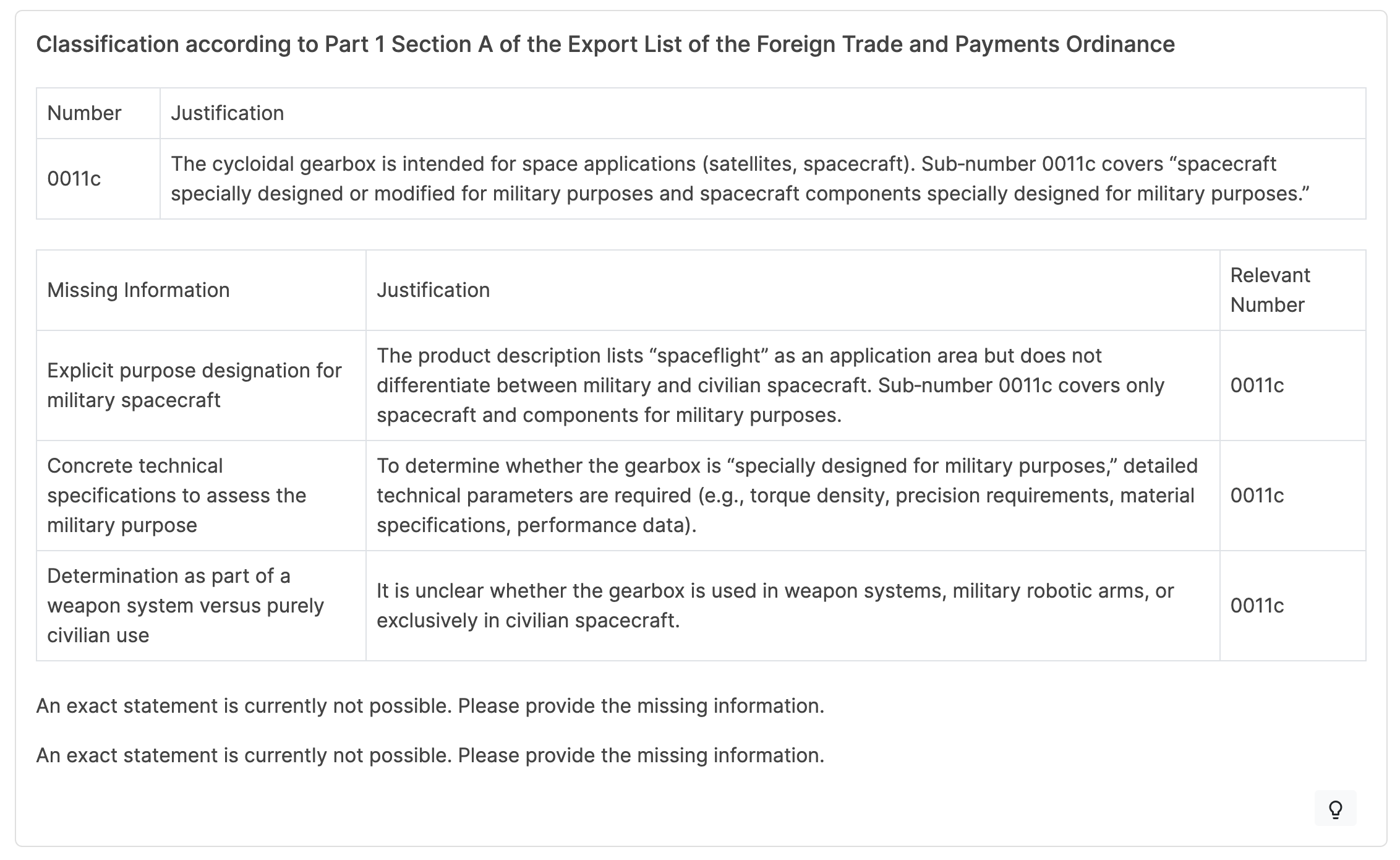
The system will propose a classification. If information is missing (e.g., for a Beryllium ball bearing), you will see a "Missing Information" section.
-
Check Versions: You may see tabs for v1, v2, v3, etc.
-
Provide Missing Info: Look at the "Missing Information" section.
-
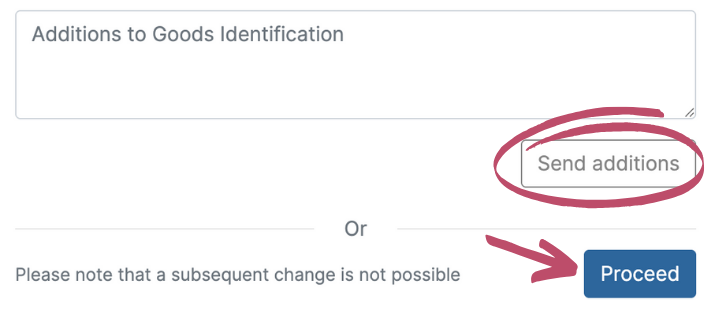
Add Details: Enter the required clarification in the box "Additions to goods description" at the bottom right.
-
Example: Confirming specific material percentages or dimensions.
-
Click "Send additions".
-
Repeat: The system creates a new version. Repeat this process until no information is missing and the criteria are met.
Each check (Military Equipment, Dual-Use EU, Dual-Use DE) shows its own data quality traffic light, so you can see which check needs more information.
Step 5: Check General Licenses (AGG)
After the checks, the AGG tab shows which general licenses of the German Federal Office for Economic Affairs and Export Control (BAFA) cover the identifications of your good.
-
Select the country of destination and click
Start check. -
The results are grouped into
Applicable,Applicable with conditionsandNot applicable. Each general license shows its validity, the covered identifications, whether the country of destination is permitted, the conditions with their citation, and a link to the full text at BAFA. -
Click
Selectto take over a general license for this proposal. -
If the BAFA data or the identifications change after the check, the tab asks you to restart the check.
The check supports your own examination of the conditions; the full text of the general license is authoritative. For goods without a listing, the tab reminds you to check catch-all clauses and embargo and sanctions law.
Step 6: Finalize and Export
Once the classification is complete and no info is missing, click "Continue".
You will see the Summary tab. It shows:
-
Leading identification: the identification of the check with the highest export control risk (Military Equipment before Dual-Use EU before Dual-Use DE), or a note that there is no indication of a listing. -
The country of destination and the general licenses (AGG) you selected, each with the person who selected it and the BAFA status date.
-
Feedback: mark the proposal as correct or wrong, and enter a corrected identification and notes.
You can now view the final result and export it as a PDF.
Continue with the Customs Tariff Classification
On the Summary tab, Start Customs Tariff Classification creates a customs tariff proposal for the same good. The description, reference, URL and files are taken over. Once started, the button changes to Open Customs Tariff Classification. The reverse direction is also possible: see Single Case. Files can only be taken over within 14 days, because file contents are deleted after that.
To classify many goods at once, use Mass.